Color Coordinating Strategies

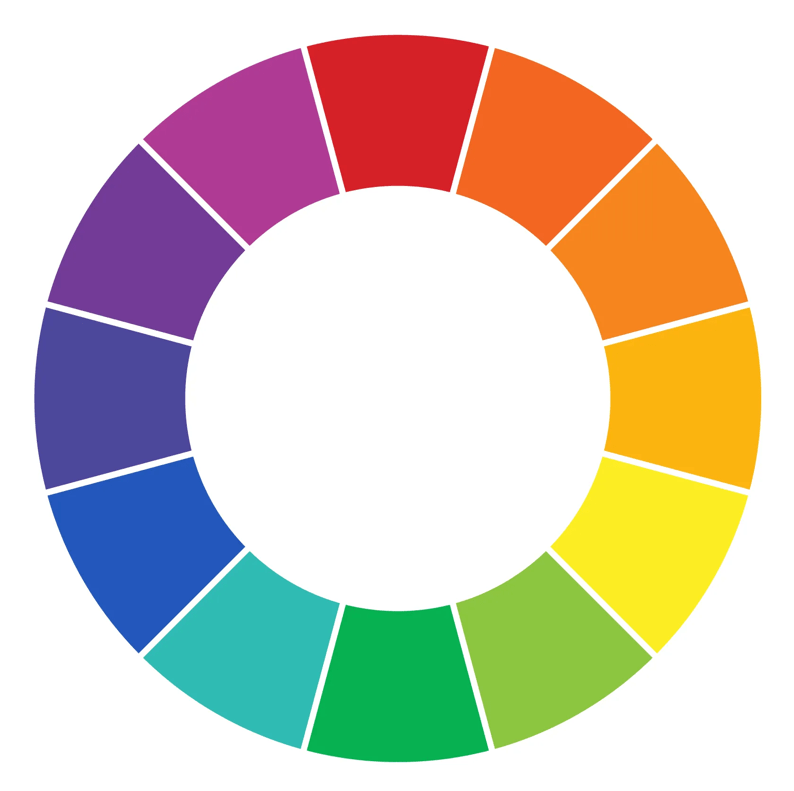
There are several ways to look at and utilize the color wheel for color coordination. For example, you’ll notice that the wheel above can be split in half between the violet and fuschia, then across the wheel, and down between the yellow and green wedges. That will effectively divide the wheel into what are known as the warm (upper right) and cool colors (lower left). If you cover the warm colors now using a piece of paper or your hand, can you see how all those cool colors look as though they belong in a family? This means that they can play well together as good color combos in scrapbooking and paper crafting.

But the possibilities don’t end with simply warm and cool color families. Let’s talk about how to find and use monochromatic, complementary, analogous, and triadic colors in your cardmaking. Here are some examples from the Stampin’ Up! Annual Catalog:

Monochromatic Colors

Monochromatic colors are one of the easiest to work with in crafting projects. To start a monochromatic card design, simply choose a color you love from the color wheel and then pair it with another shade or tint of the same color that’s a bit darker or lighter (or both!). This color coordination technique makes for perfectly matching paper projects every time, plus it comes across as chic and tastefully understated.

Analogous Colors

Ready to drift a little further from the single-hued design of monochromatic colors? Try analogous colors, which are found by combining one color with its closest neighbors on the color wheel. By choosing analogous colors for your card, you’re ensuring a look of cohesion and harmony, as these combinations are known for their calming effect in artistic design.

Complementary Colors

Complementary colors are the first ones that offer a real pop in art and design. While you find them in directly opposite positions from one another on the color wheel, these color pairings prove that opposites attract. They brighten each other’s effect in bold but friendly contrast. Complementary colors add energy and vibrancy to any crafting project.

Triadic Colors

Triadic color schemes are found by finding three colors equally spaced apart on the color wheel. These color combinations can feel just as predictable (think the primary colors of red, yellow, and blue) as they do dynamic or unexpected. If you think of the color wheel as a dial, find a triadic color combination you like by shifting the dial one click at a time away from those primary hues. Then, it’s a good idea to pick a predominant color while letting the other two play important supporting roles in your card design.

Check back tomorrow for Practical Tips for Color Coordinating Your Crafts

Color Coordinating 101: Everything You Need to Know – Part 1

When you add the word “theory” to any phrase, it can suddenly feel a bit intimidating—like it really requires an in-depth study to truly understand its complexity. Maybe that’s true, but when it comes to color theory and how it relates to color coordination in crafts, we’re here to demystify the topic and make combining colors while cardmaking and scrapbooking as simple as possible.

As defined by the Interaction Design Foundation, “color theory is the study of how colors work together and how they affect our emotions and perceptions. It’s like a toolbox for artists, designers, and creators to help them choose the right colors for their projects.”

What a great toolbox to have when you’re creating beautiful paper sentiments for your loved ones! Let’s dive a little deeper into color theory in crafting, how to work with monochromatic, complementary, analogous, and triadic color schemes and some practical tips for crafting with color. Plus, we’ll reveal the answers to frequently asked questions about color coordinating in crafts and give examples of the best color combos for cards, so make sure to bookmark this page for future reference!

Understanding Color Theory in Crafting

Understanding color theory in crafting means we need to take a closer look at basic color theory as well as the color wheel. Then, we’ll dive into how to use them both in order to find the best color combinations for any craft project you’ve got up your sleeves.

Basic Color Theory

The basis of color theory is the belief that color is important and that individual hues, color values, and saturation levels affect the mood of a visual. That color itself evokes a range of emotions in human beings.

Certain colors just seem to work better in certain scenarios—brights for birthdays and neutrals for condolences, for example. Colors really are an influential communication tool! Many scientific studies have shown that we have a natural emotional response to various hues. So, how does that relate to colors in crafting?

Well, if we understand that red is often a stimulating color associated with energy, power, or passion, we probably won’t choose to use it as a foundational color in a card welcoming a new baby. A color connected to calmness (blue) or joy (yellow) may be a more fitting choice. That said, a nice red could work well in a congratulatory card for a friend who’s recently been promoted. The color better suits the emotions of the situation being celebrated. 

While you can always dive deeper into what each color means in our culture, you can often simply trust your gut. Humans react to colors a certain way because of our scientific makeup, not because we’re told to do so. So, if instinct says that turquoise is the way to go when creating a thinking-of-you card for a specific friend, you’re probably right!

Now, things do get a bit more complex when coordinating colors in crafting. Let’s learn a little more about the color wheel to further our understanding of what good color combos might look like.

The Color Wheel

The color wheel is the perfect tool for figuring out how to mix colors in crafting. But what exactly is it?

The color wheel is a visual diagram that represents the visible spectrum of light. The colors are organized into a wheel where the ‘final’ color meets again with the initial one in a strategic gradient, forming many key visual relationships throughout. Viewing colors like this makes it easy to coordinate colors in crafting as long as you know some important strategies.

Tomorrow I’ll post more on Color Coordinating Strategies!